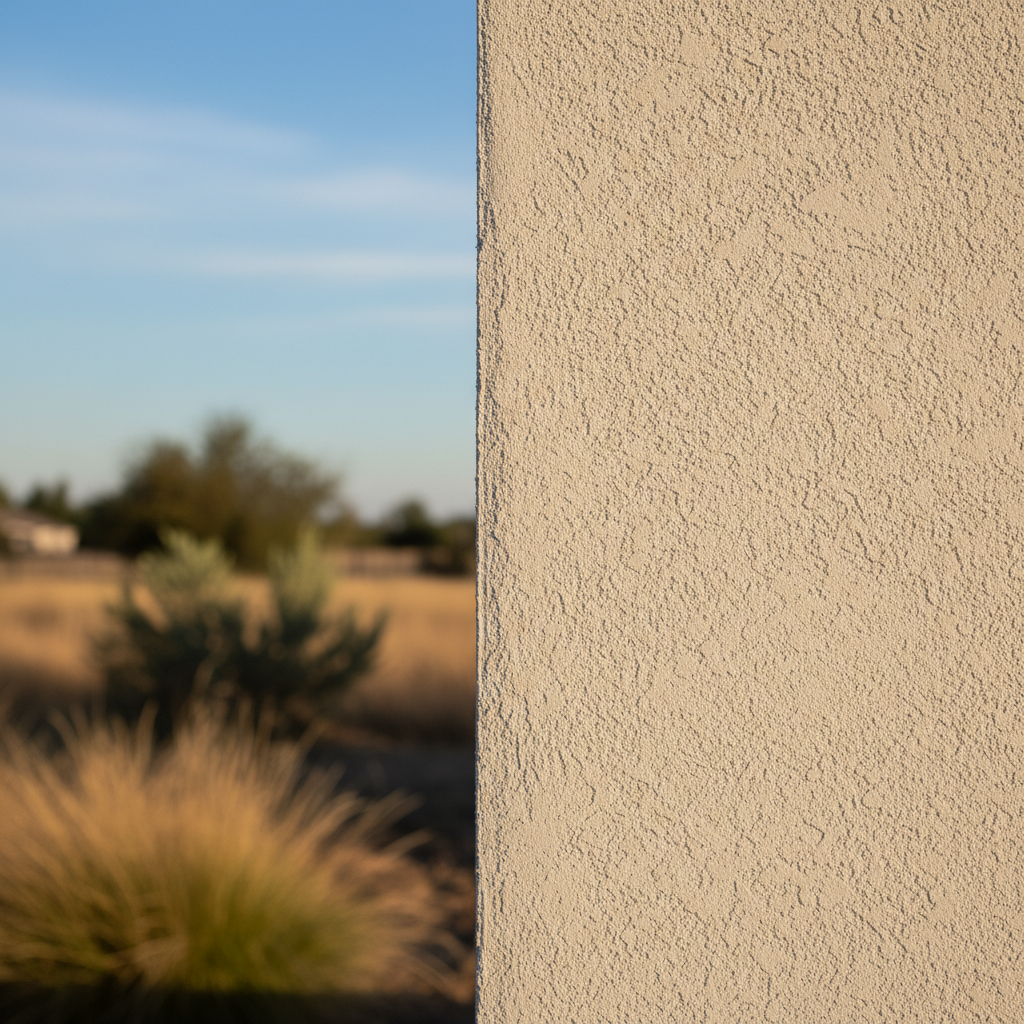
Ever walk around your house and actually look at the walls? Most homeowners do not until something starts falling apart. Out here in Madera, California, our summer heat pushes 105 degrees easy, and that constant thermal expansion takes a real toll on exterior walls. Add in our dry, alkaline adobe-style soils that shift just enough to stress a foundation, and your Stucco has to work overtime.
You do not need a cart full of expensive gear to keep tabs on your home exterior. You just need a Saturday morning, a flashlight, and a little patience. Skyline Stucco Madera will walk through what you can safely handle on your own, and when it is time to call a professional Stucco Contractor in Madera, California.
Before You Start Looking: The Prep Work
Grab a garden hose and wash down the walls a day before you plan to inspect. Do not blast it on high pressure—just a gentle rinse to knock off the dust and Madera agricultural pollen that builds up. You want the surface clean so you can actually see hairline cracks instead of mistaking them for dirt streaks. Walk the perimeter with a notepad and a roll of blue painter's tape. Whenever you spot something weird, slap a piece of tape on it so you can find it later without guessing.
What You Can Handle Yourself
Hairline cracks happen. If they are as thin as a pencil hair, you are usually looking at normal curing or minor temperature shrinkage. Take a look around windows and doors first, since those are classic trouble spots where water likes to sneak in.
- Spot minor hairline cracks under 1/16th of an inch using an elastomeric patching compound.
- Check the weep screed at the bottom of your walls near the soilline to make sure dirt, mulch, or flower beds have not piled up against it, which traps moisture.
- Look for white, powdery crusts called efflorescence, which is just salts leaching out with moisture, and you can usually scrub it off with a stiff nylon brush.
- Keep an eye on sprinkler heads that spray directly against your house every single day, turning solid cementitious walls into a sponge.
When to Call a Pro
There is a big difference between cosmetic touch-ups and structural trouble. If you see a crack you can slide a credit card into, put the do-it-yourself gear away. That is no longer a surface issue; it means the substrate or lath underneath might be failing. Skyline Stucco Madera gets calls all the time from homeowners who tried to slap quick-fix caulk over a major structural fissure, only to find the lath rusted out completely underneath.
Call in a licensed stucco contractor if you notice bulging sections, hollow-sounding areas when you tap the wall gently with a knuckle, or rust stains bleeding straight through the finish coat. Rust means moisture has gotten behind the barrier and is chewing up your metal lath from the inside out. Fixing that takes real demo work, proper flashing, and a multi-coat application to blend it back into your existing texture so your house does not look like it is wearing a patchwork quilt.
After Your Inspection
Once you have marked up the walls and tackled the minor hairline cracks with some elastomeric patch, take a breath. Make a habit of doing this check twice a year—once before the brutal summer heat sets in, and once after the winter rains pass. Staying ahead of small gaps stops them from turning into expensive water damage. If you find something that makes you scratch your head, just reach out to Skyline Stucco Madera for expert Stucco Repair services in Madera, California, and we will come take an honest look at it.